
What Happens After Invisalign Treatment: Your Guide to Success
By Sarah T. Potter, DMDFor many, starting Invisalign treatment is a big deal, because having straight teeth is a big confidence boost. And when you use Invisalign, you can rest easy in flashing that new, beautiful smile. However, undergoing Invisalign treatment isn’t a magic wand for a perfect smile because you need to take steps to maintain your results.
Have you considered the steps to maintain the work that Invisalign does? And what happens after Invisalign treatment is completed? These are common questions.
Taking the time and money to fix misaligned teeth isn’t cheap. Knowing the road map ahead gives you the confidence and ability to plan for success in achieving that perfect smile. You’ll learn what to anticipate and the crucial measures for protecting your investment for years to come. You must continue using proper dental techniques to achieve the exact results you’re looking for.
Table of Contents:
- Life After Invisalign: The Retention Stage
- Maintaining Oral Health and Hygiene After Invisalign
- Addressing Common Post-Invisalign Concerns
- Frequently Asked Questions
- Conclusion
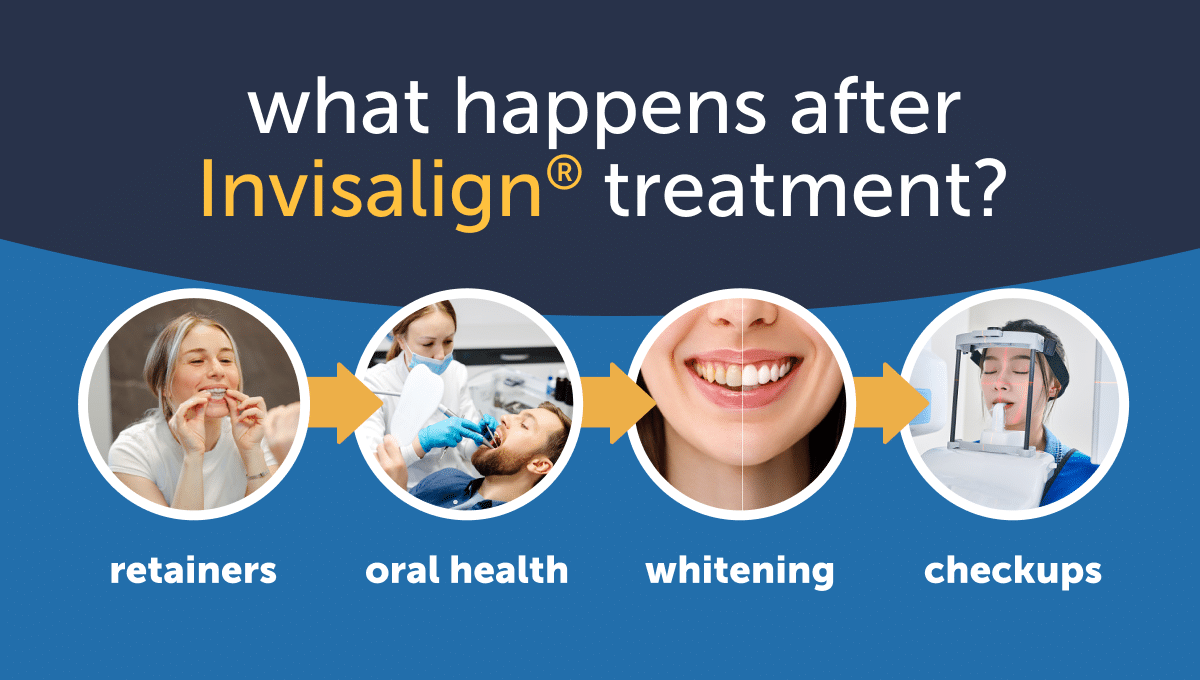 Life After Invisalign: The Retention Stage
Braces might be ancient history. Your last set of aligners may seem like a distant memory. This doesn’t mean your work in maintaining straight teeth is done though.
Long-term retention is about dedication and sticking to your dentist’s plan to maintain your new smile. With that in mind, let’s jump into some retention realities.
Why Retainers Are Essential After Invisalign
Post-treatment maintenance begins with retainers. You might wonder if retainers are worth it after going through Invisalign, but they are vital. Your teeth still remember where they used to be, so using removable retainers makes sure your teeth won’t revert to their old position.
Here’s why you shouldn’t ditch the idea of retainers yet. This part is all about securing your new beautiful smile after investing time and money.
- Keeps teeth properly aligned.
- Bone and gums need time to adapt to new teeth positions.
- Prevents teeth from shifting back.
How Long Should You Wear a Retainer?
You might need to wear your removable retainer almost all day, every day, for the first few months after treatment ends. Talk to your dentist because they may also have you switch to wearing them only during the night. Whatever you do, don’t stop wearing a retainer just because your teeth feel solid in place.
Typically after the first year, retainer use may be reduced to only a few nights per week as long as the bone stabilizes. Make sure to seek recommendations from your dentist though because professional guidance is key to long-term success.
A retainer timeline can be slightly different for everyone, so listen to your dentist. They will create a personalized retainer routine for preserving your radiant new smile.
Types of Retainers to Consider
So, you’ve accepted the fact you will need a removable retainer, that’s awesome. You also should explore what options are available. Each has its own set of pros and cons depending on your lifestyle.
Here are some common options. This will set the stage for our retainer deep-dive.
- Clear Plastic Retainers: These look similar to Invisalign aligners. You can easily take them out to eat, brush, or at other times during the day.
- Hawley Retainers: This classic retainer is made of metal wires and acrylic and are known for their durability.
- Fixed Retainers: Bonded to the back of your teeth, these are a permanent solution for preventing unwanted movement.
Clear Plastic Retainers
This is typically the most popular choice because of its look. Because clear plastic retainers look just like Invisalign aligners, they aren’t very noticeable.
Easy to use, but more fragile when compared to other alternatives like a Hawley retainer, there are some sacrifices that have to be made. Vivera® retainers, an Invisalign product, are made with a stronger plastic for more durability.
One unique plastic is 30% stronger and twice as durable as other standard clear plastic retainers so you can buy with peace of mind. These Vivera® Invisalign retainers are a worthy investment in protecting that beautiful smile, since they typically last around 10 years.
Hawley Retainers
Constructed of metal wires and acrylic, Hawley retainers may feel like going back to the Stone Age. But don’t let their looks deceive you, Hawley Retainers are adjustable and super durable. Oral health pros have been using them for ages.
One awesome feature of this kind of retainer is that the metal wires can be adjusted to fine-tune alignment if minor corrections are required. They might be a bit more visible, but they get the job done.
A big downside is cleaning and keeping up with it; just remember, a clean retainer helps you achieve the result you want. Plus, since it’s removable, remember not to leave a retainer where pets or small children can get ahold of it and cause potential disasters.
Fixed Retainers
Looking for something that requires absolutely zero effort on your part? Fixed or bonded retainers might be exactly what you’re seeking. With this style of retainer, a wire is placed behind the interior of your teeth, which makes it virtually undetectable.
This is a great choice if you want a super low-maintenance and reliable option to keep teeth aligned after treatments like Invisalign. Fixed retainers tend to accumulate more plaque and tartar than removable ones, however. So, you really need to prioritize proper hygiene.
Brushing and flossing can be a challenge because of the attached wire, but using floss threaders and interdental brushes will greatly help. These require no effort because they are undetectable, so fixed retainers ensure round-the-clock retention without needing you to lift a finger.
| Retainer Type | Pros | Cons |
| Clear Plastic Retainers | Nearly Invisible, Easy to Remove | Less Durable, Can Stain |
| Hawley Retainers | Durable, Adjustable | More Visible, Cleaning Required |
| Fixed Retainers | Permanent, No Effort Required | Difficult to Clean, Potential Plaque Buildup |
Maintaining Oral Health and Hygiene After Invisalign
Brushing and flossing twice a day are still non-negotiable for keeping dental problems away. After the work of teeth straightening is complete, keep visiting your dentist because healthy gums are crucial for your teeth to look the way they should.
Also, there are other parts of teeth and gum maintenance after treatment ends that are unique.
Specialized Cleaning Methods for Retainers
Do not overlook the fact that properly cleaning your clear aligners keeps gross bacteria away. And not cleaning a retainer or dentures might cause sickness down the road. You will be glad you know how to handle cleaning beforehand, as well as other tips.
This knowledge promotes the most hygienic oral care. It also expands your understanding of maintaining oral health to extend the life of both your beautiful smile and your clear plastic retainer.
- Cleaning Solutions: Using specialized clear aligners cleaning solutions, which you can find at most drug stores is an easy start.
- Mild Soap and Water: This is a go-to, simple method. All you have to do is use gentle soap to scrub.
- Denture Cleaners: Yep, that’s right. Denture cleaners work just fine, just make sure you rinse after to not let chemicals into your mouth.
Foods to Avoid Immediately After Treatment
During treatment, you can just remove your aligners and eat whatever. Does the same mindset work right after completing Invisalign treatment? Well, not exactly.
Even though you can technically eat whatever you want after removing them for lunch, for a little while, your teeth and gums might feel more sensitive than before. So, during the first few weeks, it’s probably better to eat only soft foods – both for comfort and help with the adjustment period. Think apple sauce or soup.
Now, here are some foods and beverages that you really want to reduce or eliminate so you can keep teeth nice and bright. They have the potential to harm or discolor your teeth. They don’t call it white and bright for no reason. Let’s check out this list so your treatment isn’t all for nothing.
- Coffee and Tea
- Red Wine
- Sugary Foods
Regular Dental Check-Ups
Invisalign isn’t something you can set and forget to maintain a great smile. Staying committed to good habits keeps teeth healthy and straight by keeping bacteria away. Frequent visits to a dentist also ensure they catch issues you can’t see coming yourself.
Regular dentist visits allow for constant monitoring and all-around support. Professionals provide any treatments as needed for sustained oral health. Plus, if any accident happens, you need to address those issues immediately.
Addressing Common Post-Invisalign Concerns
It’s easy to start wondering about what might go wrong as you leave your aligners behind and look toward a life free of removable retainers. Many people even ask how they can accelerate the time needed to wear retainers (to hold teeth in place)?
Think through and tackle possible problems to navigate this new phase successfully. A few potential concerns to tackle head-on include:
- Teeth Shifting
- Speech Issues
- Discomfort Issues
What To Do If Teeth Begin Shifting
What about slight shifts in your teeth after using aligners? It’s more common than you might think. Don’t let small shifts get out of hand because they might cause a downward spiral.
Contact your dentist right away if you notice your teeth moving – because teeth that aren’t held properly are vulnerable to movement. Quick responses to slight movement make sure that small issues don’t become more severe problems.
Managing Speech Issues
Problems with speaking can sometimes occur from a new, removable retainer – though this is not typical. If it ever does happen, however, practice speaking difficult words because practice and familiarity over a time period naturally allow resolution of minor speech challenges. If you have continued speech problems, contact your dentist.
Addressing Discomfort
Sometimes straightening your teeth results in discomfort. However, discomfort does not mean your Invisalign aligner did not work fully. Understand that soreness or discomfort may point to several factors. Here’s a checklist of normal concerns and how you can address them:
- Be prepared with a soft diet, avoid chewing, and allow soft tissue to toughen.
- Always ask your dentist how to ease and address soreness or discomfort. Dental staff have a long list of patients and they are happy to pass along advice about what has eased occasional soreness during the maintenance process.
- Normally, problems only arise at the start as your mouth adjusts following the removal of aligners. Discomfort tends to pass very rapidly during the maintenance period. However, being observant and asking your dentist about any concerns is key. After your jaw is settled then you should see more normal maintenance that should not pose problems so any initial adjustment is often short with time.
- Any dental concern requires keeping regular checks and communication which is absolutely necessary for getting your beautiful smile and long term plans. Be sure to constantly reach out if at any time you’ve been through steps, questions or discomfort that is new. Constant checks for health concerns and what might have arisen keep those beautiful smiles going.
Frequently Asked Questions
Here are some frequently asked questions about what happens after Invisalign treatment ends.
Q: Can I drink hot beverages while wearing clear plastic retainers?
A: It is not advisable to drink hot beverages while wearing clear aligners. The heat can warp the plastic and affect the fit of your removable retainer.
Q: How often should I clean my removable retainer?
A: Clean your retainer daily to prevent bacteria buildup and bad odors. Use a retainer cleaner or mild soap and water.
Q: What should I do if I lose my retainer?
A: Contact your dentist immediately. They can provide a replacement retainer to prevent your teeth from shifting.
Q: Can I chew gum while wearing a removable retainer?
A: No, avoid chewing gum while wearing your retainer as it can stick to the plastic and damage it.
Q: Can I play sports while wearing a removable retainer?
A: It’s best to remove your retainer when playing sports to avoid damage. Use a mouthguard for protection.
Conclusion
Taking care of your beautiful smile after dental treatment is vital for protecting an investment. Remember, you’re not alone in this journey. A little knowledge and continued maintenance will help keep you relaxed and enjoying a sparkling grin.
At BGW Dental Group, we’re here to guide you every step of the way. We provide expert strategies for ongoing oral care to help keep your Invisalign smile straight, beautiful, and strong, so you can enjoy it with confidence.